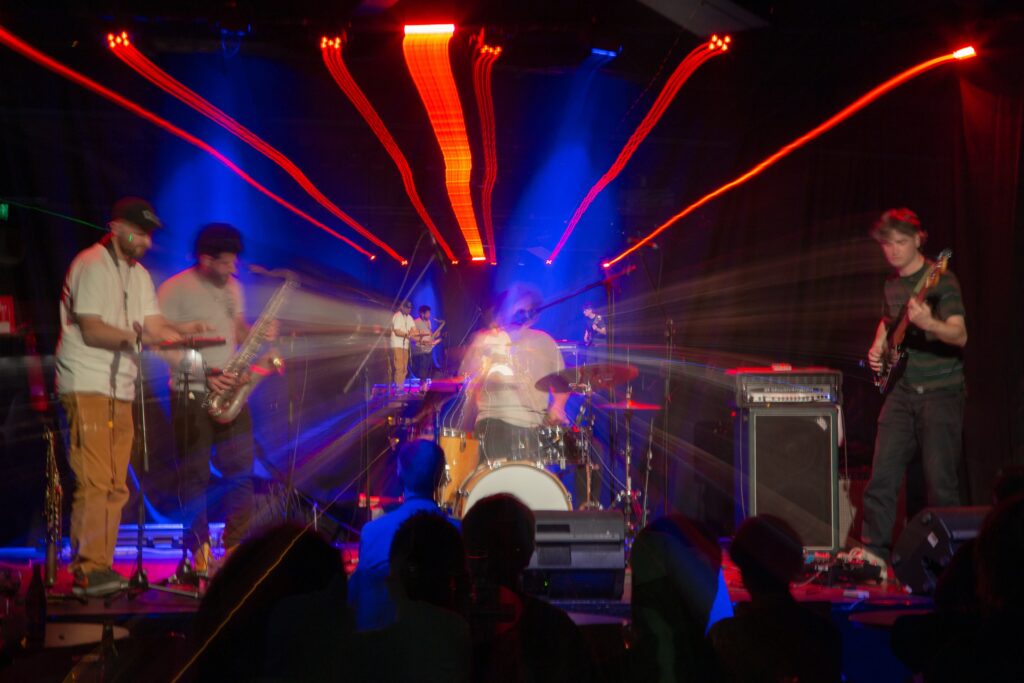
Over 100 delegates gathered in Belfast this month for Where Pathways Meet: the Jazz Promotion Network conference 2022. Held at The MAC in the city’s vibrant Cathedral Quarter, the conference brought together artists, promoters, educators, funders and administrators from across the British and Irish jazz sector to discuss the future of jazz on these islands. Belfast’s first music laureate Brian Irvine presented an inspiring keynote on the theme of ‘Jazz as a Beacon of Hope.’ Delegates also enjoyed live music throughout the conference, with partners Moving On Music (Belfast) and Improvised Music Company (Dublin) presenting a Next Generation showcase at the nearby Black Box venue.
Financial support from Creative Scotland, Arts Council Wales and JPN reserved enabled 24 artists and organisers, shared equally across Scotland, Wales, England and Northern Ireland/Ireland, to attend the conference. Suzanne Griffiths-Rees of Arts Council Wales remarked, “It’s great that JPN are working actively across the UK and Ireland. It helps us all understand the issues and maybe begin to join the dots.” Ciaran Scullion of Arts Council Northern Ireland added, “That this is happening right here, right now in Belfast is just really, really special. I mean, we’re at the farthest end of Europe, our tiny little place. Yet our five nations from these islands are gathering together with real energy, with real enthusiasm. There’s something incredible about that right now”.
Opening the conference, Irvine spoke about jazz and improvised music as “an ocean of infinite possibility”. The act of improvising, he argued, has implications not only for music but for how we live our daily lives. “It’s social and it’s playful and political.” He demonstrated this by inviting the audience to make noise with him, transforming the conference into an improvising orchestra. Irvine closed his keynote by proposing a national day of improvising, “for the advancement of dialogue between all things.”
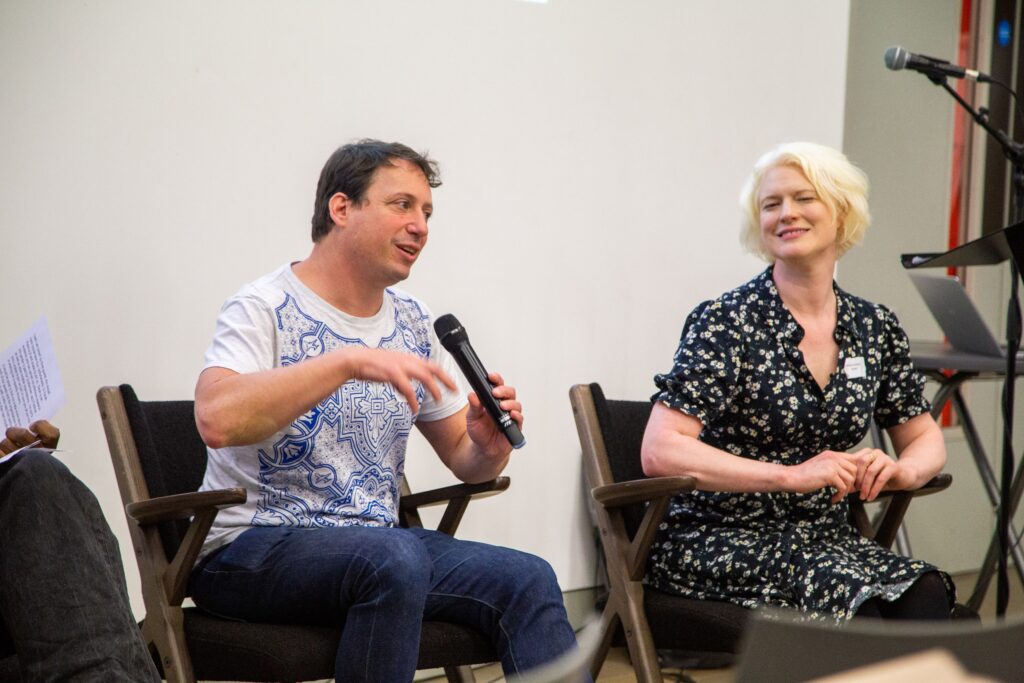
The dialogue continued in the three parallel panels exploring ‘routes into jazz’. A panel chaired by JPN Vice-Chair Orphy Robinson discussed ways of involving and supporting young musicians, while Heather Spencer of Jazz North led a conversation about the new breed of promoters, agents and managers. The third panel asked ‘what does inclusion really mean?’ with contributions from Roger Wilson of Black Lives In Music, Helena Summerfield of Jazz Camp for Girls, Gideon Feldman of Attitude is Everything and musician and co-founder of Disabled Artists and Disabled Academics Campaign for Human and Cultural Rights (DADA).
Each of the panelists brought their own experiences to the discussion, with broad agreement that action and not words was crucial in overcoming structural barriers and inequalities. Reflecting on the event, panelist and jazz singer Georgia Mancio tweeted, “We all look a little dejected as we honestly addressed the stamina required by musicians right now. The common denominator over other great panels was the need for deeper collaboration and dialogue. Promoters and musicians are in the same boat!”
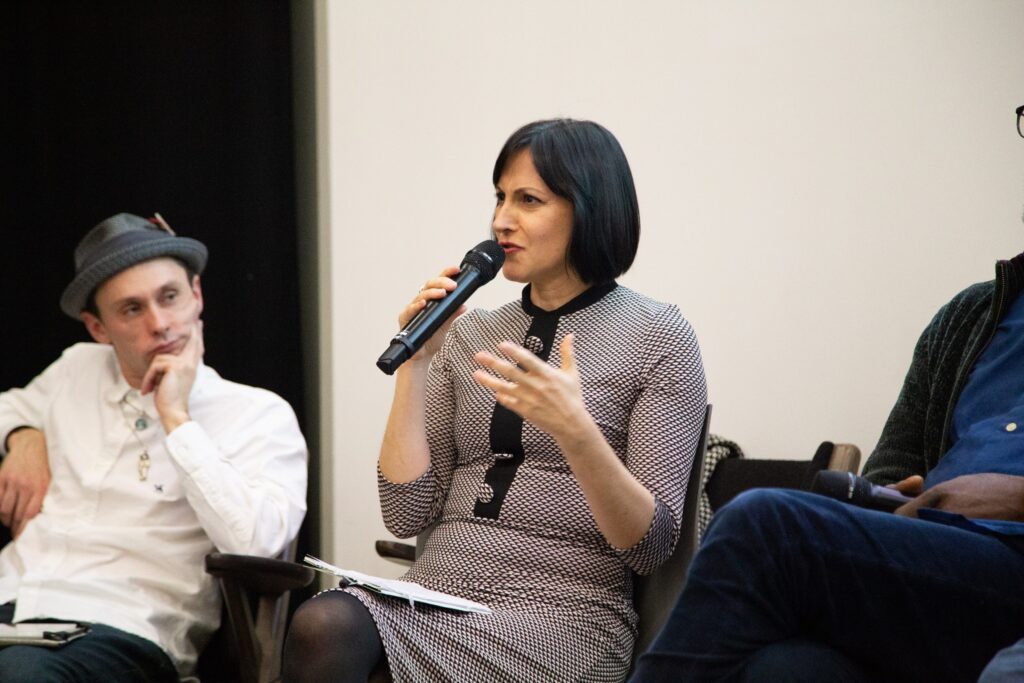
In the afternoon, discussion sessions featuring JPN friends and members covered future governance models for jazz promoters, growing the volunteer pool and widening the funding base. In the panel on 21st century career in jazz, musicians from across these islands shared their experiences of working multiple roles from promotion and social media, to distribution and booking.
On the second day, the Five Nations Jazz panel explored the current state of jazz on these islands, and how people are reacting to challenges around Covid, Brexit and the Cost of Living Crisis. The Five Nations Funders panel featured representatives from Creative Scotland and the Arts Councils in England, Wales, Northern Ireland and Ireland, leading to a lively discussion where musicians and producers expressed their frustration at the difficulty of booking tours across more than one national boundary.
Three further discussion sessions followed in the afternoon, focussing on touring, audience development and showcasing. The first panel brought up the necessity of greener touring, with Douglas Robertson of Edinburgh Soundhouse commenting, “We badly need an extensive database of venues across the UK. We can build a better picture of what’s available – create viable, carbon neutral tours.” In response to the question of what audience development is, the floor put forward several key factors: “experience, discounts, data, digital, research, communication, community, conversations, capturing, targeting, gathering, barriers, GDPR, engagement, sharing, learning, opt-in, welcoming, accessibility.”
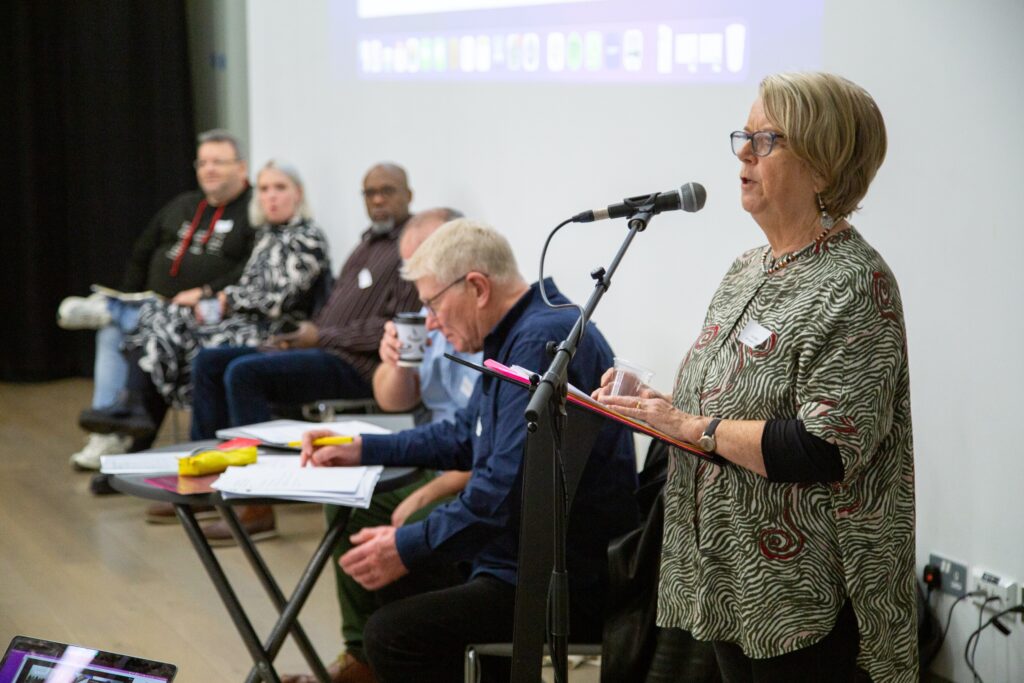
Following a witty and insightful overview of the conference from Belfast based journalist Ian Patterson, JPN Chair Ros Rigby gave a summary of the organisation’s future plans and revealed the location of 2023’s conference as Birmingham. While a date has yet to be confirmed, Rigby noted that it would be in the Autumn.
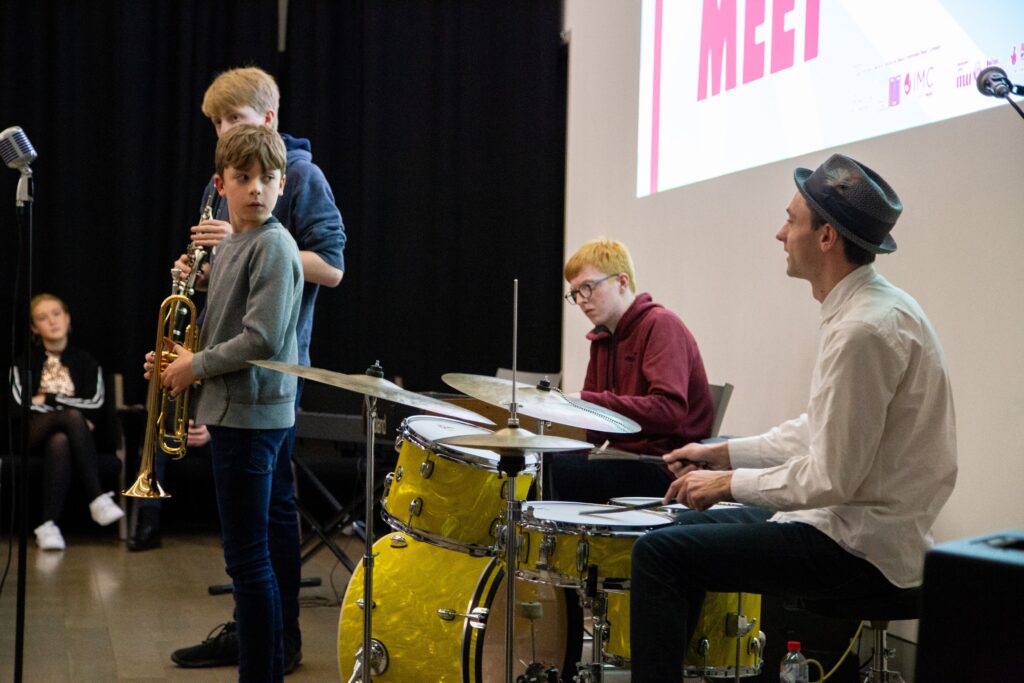
Between sessions, delegates were entertained by musical interludes from drummer and composer Stephen Davis, and young musicians from David Lyttle’s Jazz Juniors group. Davis’s set blended inventive live drumming with electronics, while the Jazz Juniors impressed all with their confidence and skill. Harpist/composer Úna Monaghan presented a fascinating video performance entitled And The Goals Will Come, exploring the intersection of improvised music and the Irish sport of hurling.
The New Generation Showcase at Black Box featured a wide range of talent from Ireland and Northern Ireland. Scott Flanigan Quartet opened with a dazzling set of lyrical contemporary jazz, followed by the soulful grooves and robust tenor saxophone licks of RBG Trio. Pianist Izumi Kimura and flautist Lina Andonovska presented a masterclass in duo improvisation while Robocobra Quartet closed the evening with a storming set of post-punk and electronica influenced jazz-rock.
Steven Davis reiterated the importance of having JPN in Belfast. “It’s great to get people’s ideas on how jazz works in the UK and Europe and how we can maybe look at pulling together all the different musicians that are performing jazz-based music, and try and see a way of galvanising it so that we can create a bigger scene and grow the music”. Where Pathways Meet represented a significant step in making that hope a reality, raising key issues and proposing areas to build on.